Usually not. Presale tickets generally cost the same face value as general-sale tickets for the same seat. What a presale gives you is earlier access, a better shot at the seats you want and a lower chance of landing in a price spike. Whether your final total is lower depends on fees, dynamic pricing and which seats are on offer when you check out.
This guide shows where price differences come from, how to compare a presale offer with a general sale fairly, and what to do before the sale starts to keep your total down.
TL;DR
- Presale is mostly about access, not discounts. One card issuer’s FAQ says its presale and general sale carry no difference in ticket pricing.
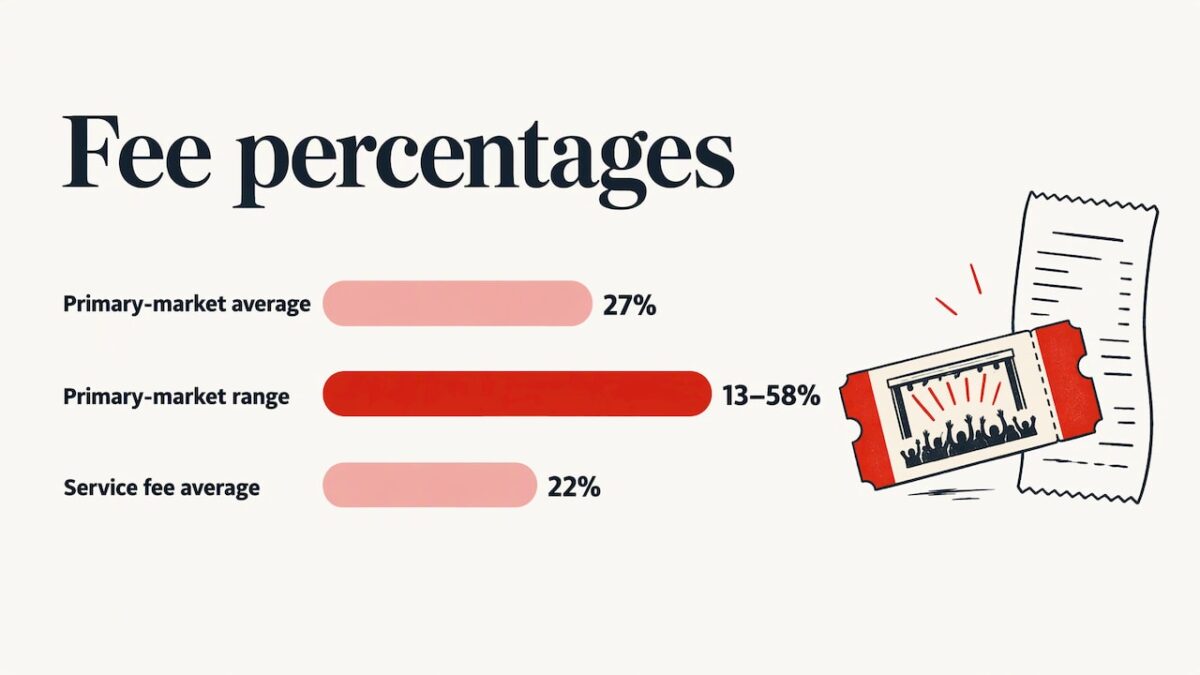
- Fees are the bigger swing. A federal review found primary-market fees averaging 27% of face value, with a range of 13% to 58%.
- Dynamic pricing can raise prices during a high-demand sale, whether that sale is a presale or a general sale.
- A cheaper-looking ticket is often a different seat or product. Compare the same section, ticket type and fee basis.
- Prepare for the presale with a plan and a budget so you are not forced into the priciest seats.
Table of Contents
- The short answer: same face value, different odds
- Why prices can look different between presale and general sale
- How fees change the price you pay
- A fair way to compare presale and general sale
- How much of a show goes to presale?
- Which presale should you pick?
- Prepare so price does not force your hand
- Perspective
- Where to start
- FAQ
- Sources
The short answer: same face value, different odds
The price of a concert ticket is set by the people behind the show. The U.S. Government Accountability Office (GAO) notes that artists, managers, agents and promoters set concert prices, and that ticketing fees can add substantially to the price. A presale is a sales window that opens before the public on-sale. It is not a separate price list.
A card issuer’s own FAQ says there is no difference in ticket pricing between its presale and the general sale. That matches how most big tours work: the same seat has the same face value in each window, unless the promoter or seller has chosen to change it.
So the honest answer to “are presale tickets cheaper” is this: not by default. Where you may come out ahead is indirect:
- You pick from a fuller map, so you are not stuck with whatever is left.
- You avoid resale markups on sold-out shows.
- You finish checkout before demand-based pricing pushes remaining seats up.
If you want the full list of ways to get in early, see our guide to getting presale tickets with or without a code.
Why prices can look different between presale and general sale
People do report paying less in one window than in another. That is usually one of five things.
You are looking at a different seat
A presale might show you the entire venue, from the cheapest upper-level seats to the best floor positions. A general sale a week later might show only what remains, which can skew toward either end of the price range. A pricing professional’s explainer advises comparing the same event, seating or admission category, ticket type, benefits and fee basis, because a cheaper-looking ticket may be a different seat or product.
The presale is attached to a package
Some presales are tied to premium inventory. One card program’s FAQ describes its presale as early access, typically up to 48 hours before the public sale, and describes premium seats, VIP experiences and limited preferred tickets as separate items held back from the public. Those are perks. They are not a universal presale discount, and they usually cost more, not less.
The same logic applies when you weigh VIP upgrade options: reserved or enhanced access is a different product from a lower price, so judge it on what you get for the extra money.
Dynamic pricing moved the number
Dynamic pricing means prices adjust with demand. The Conversation explains that for some concerts buyers may not see the price until they reach the front of the queue. It describes a Green Day example in Australia where a seated ticket reached A$500. That example is not from the U.S., but the mechanism is the same wherever it is used. A presale on a hot show can be priced dynamically too, so early access does not exempt you.
A Belgian report on a 2023 tour showed the same pattern: ordinary Beyoncé tickets ranged from €64 to €183, while a platinum ticket cost nearly €600. Tiered and demand-based pricing creates a wide spread inside a single event.
Fees were calculated differently
Fees are the quiet part of the price. In the next section we go through the numbers.
The presale was for a different seller
If one window is on one platform and the other is on another, the fee structures may differ even when the face value matches. Always compare the final checkout total, not the headline price.
How fees change the price you pay
Fees often matter more than the choice between presale and general sale. The GAO reviewed 31 events and found that primary-market fees averaged 27% of face value and ranged from 13% to 58%. Service fees averaged 22%. Order-processing fees appeared on 14 events at $1.00 to $8.20, and facility fees on five events at $2.00 to $5.10. That was a 2018 review, so treat the percentages as a guide to how fees are built, not as today’s exact rates.
The BBC gave a concrete U.S. example in 2023: four $20 tickets cost $172.10 after service, facility and order-processing fees, while another $20 ticket in Phoenix cost $72.25. Fees varied by venue.
This has a practical consequence. Percentage-based fees rise when dynamic pricing raises face value, and flat per-order or per-facility charges weigh differently on a small order than a big one. The GAO’s data supports a simple rule: compare all-in cost for equivalent seats, not face value.
Here is how to read a checkout page:
| Line on your checkout | What it usually is | What to do |
|---|---|---|
| Ticket price | Face value of the seat | Compare only against the same section |
| Service fee | Seller’s percentage or flat charge per ticket | Note it per ticket |
| Facility fee | Venue charge, often flat | Check if it applies per ticket or per order |
| Order-processing fee | Flat charge per order | Fewer, larger orders can lower the per-ticket share |
| Delivery | Mobile delivery is typically included | Pick the cheapest delivery option offered |
Our breakdown of Ticketmaster ticket fees goes through each line in detail.
A fair way to compare presale and general sale
You can only compare once both windows are visible, and often they are not at the same time. Use this process.
- Write down your target. Choose a section, a maximum all-in price per ticket and the number of tickets.
- Check the venue map in the presale. Note which sections are on sale and the face values shown.
- Go to checkout before paying. The all-in total is what counts. If the total goes past your cap, you have found your answer for that listing.
- Compare equal products. A floor seat with a package is not the same as a plain floor seat.
- Decide on risk. If the show is likely to sell out, the guarantee of a seat at a fair total may be worth more than a chance at a slightly lower price later.
That last point is where most fans get stuck. We have not found a checked source that shows waiting for the general sale reliably yields lower prices or better seats, so we do not promise either. For a high-demand tour, the seats you want may be gone, and what remains may be priced differently. For a smaller show with plenty of inventory, you have more room to wait.
How much of a show goes to presale?
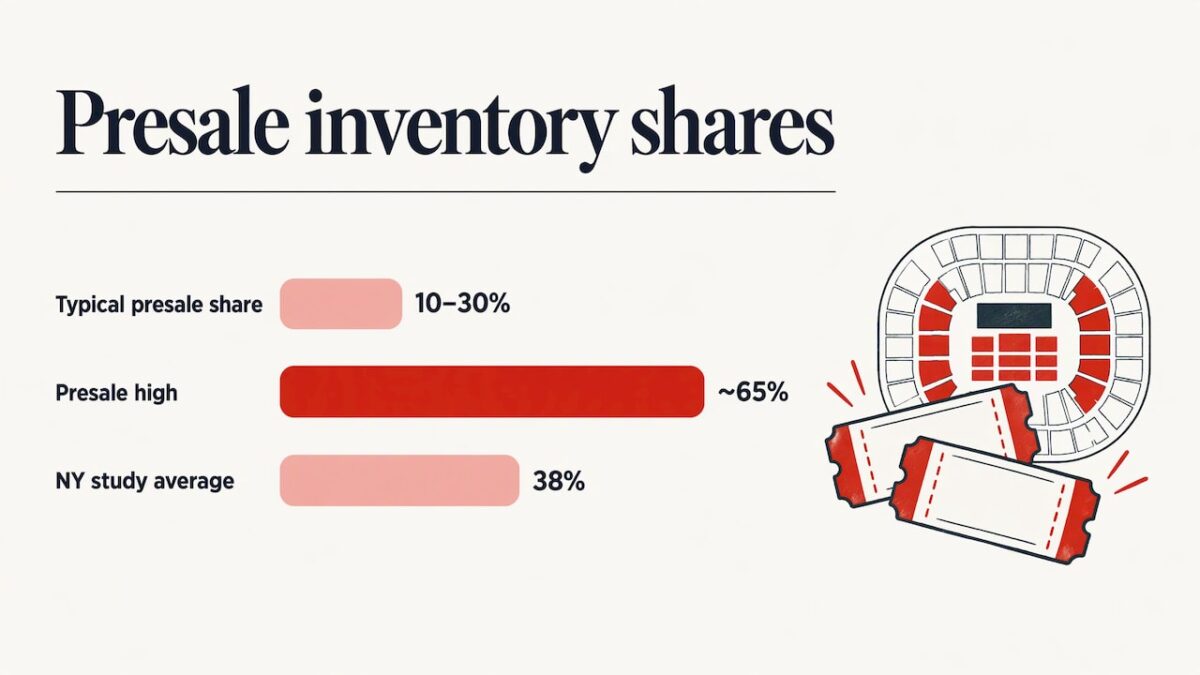
The amount of inventory held for presale shapes your odds. The GAO reported that industry representatives said roughly 10% to 30% of tickets for major concerts were typically offered through presales, sometimes reaching about 65%, and noted that comprehensive data were unavailable because allocations are usually confidential.
The same report cited a 2016 New York State Attorney General study that found an average of 38% of tickets allotted to presales for 74 top-grossing concerts at selected New York venues from 2012 to 2015. That is a New York figure from a past period, not a national average.
The takeaway: presales can hold a large share of the best seats. That is the real advantage. If you skip them, you compete for what is left.
Which presale should you pick?
Not every presale is equal. Each type of access has its own pattern:
- Artist or fan-club presales: Often the first window. We cover signing up in our guide to artist presale tickets.
- Card presales: Tied to a cardholder benefit. See how they work in our guide to card presale tickets.
- Venue and seller presales: Often use a code. Our page on finding an AXS presale code explains where those turn up.
If you can enter more than one window, treat each as a separate chance. A missed first window does not close the door on the next one.
Prepare so price does not force your hand
Price pressure is highest when you are in a queue, with a countdown, and the cheap seats are gone. Lower that pressure before the sale.
- Decide your ceiling in advance. Pick a per-ticket all-in number and stick to it.
- Choose two or three sections you would accept. Our guide to the best seats at concerts helps you rank them.
- Log in early and save payment details. Slow checkout costs seats.
- Understand the queue. Our Ticketmaster waiting room guide explains what happens when you join, so you do not refresh and lose your place.
- Know your fallback. If you miss out, our page on sold-out concert tickets covers safer ways to look.
Perspective
We read the same question from fans every week: is the presale worth the effort if it does not save money? Our answer is yes, but for a different reason than most people expect.
A presale is a head start. It lets you see more of the venue, make a calm choice and check out before demand changes what is on the screen. That is valuable, and it is why we spend our time on preparation, not on secret tricks.
We are independent of ticket vendors, and we focus on clear, step-by-step guidance written around real fan questions. That means telling you plainly that a presale does not guarantee tickets, and showing you the routes in: free memberships, artist sign-ups, card and venue perks, and a code when one exists. Fans who prepare in advance, know their budget and read the full checkout total make better buying decisions than fans who only chase a code.
Capital
Where to start
If you are planning for an upcoming on-sale, start with our overview of every way into a presale, with or without a code. It walks through memberships, artist sign-ups and card benefits in the order you should try them, so you can enter more than one window. You can also browse tour and on-sale coverage on the Ticket News Hub homepage.

When you are ready to buy, compare the all-in total at checkout against your ceiling before you pay.
FAQ
Is presale cheaper than general sale?
Not as a rule. The face value for a given seat is usually the same in both windows, and one card program’s FAQ states there is no pricing difference between its presale and general sale. Savings, if any, come from avoiding resale markups or demand-based price increases, not from a presale discount.
Can presale tickets cost more?
Yes, in some cases. Presales can include premium seats or VIP packages that are priced higher, and dynamic pricing can lift costs during a busy sale. The extra cost usually reflects a different product or higher demand, so compare the same section and the all-in total.
Do I pay different fees in a presale?
Fees depend on the seller and the event, not on the window. A federal review found primary-market fees averaging 27% of face value across the events it examined. Check the full total at checkout before you confirm.
Is it better to buy in the presale or wait?
It depends on demand. For a show likely to sell out, a presale gives you the widest choice of seats. For a show with plenty of inventory, you can compare windows. Either way, set a per-ticket ceiling first and buy only if the all-in total fits it.
Sources
- GAO-18-347, Event Ticket Sales: Market Characteristics and Consumer Protection Issues
- What You Should Know About Event Ticketing, U.S. GAO
- Frequently Asked Questions, music.priceless.com
- Frequently Asked Questions, us-music.priceless.com
- Why can presale tickets cost more than general-sale tickets?
- What is dynamic pricing for concert tickets?, The Conversation
- Gedaan met peperdure concerttickets?, Eventplanner
- The Cure’s Robert Smith says he’s sickened by ticket fees, BBC
Leave a Reply