Most concert tickets in the US are not refundable in the way people hope. If you simply change your mind, the answer is usually no. If the show is canceled, the answer is usually yes, and for postponed or moved shows it depends on where you live and where you bought. Knowing which situation you are in before you pay is the whole game, and our concert ticket buying tips cover the rest of the prep.
This guide explains what “refundable” really means, what the law says about canceled and postponed shows, how new state and federal rules are changing things, and how to file a claim that gets paid.
TL;DR
- A “refundable” concert ticket almost always means refundable if the event is canceled, not if you change your mind. Fixed-date event tickets rarely come with a cooling-off period.
- Postponements and venue changes are the gray zone. Your rights depend on state law and the seller’s terms, and several states and Congress are moving to tighten them.
- Buying from an official seller is the single biggest thing you can do to keep refund rights. Resale and fan-to-fan purchases are much harder to get money back on.
- Check the refund wording, fee treatment and payment method before you click buy, and keep your receipt and every notification email.
- Refunds rarely cover flights and hotels, so book those with free cancellation.
Table of Contents
- What “refundable concert tickets” actually means
- Canceled shows: the strongest refund case
- Postponed, rescheduled or moved: where it gets complicated
- What is not refundable, even when the show is
- Where you buy decides how much you can recover
- A pre-purchase refund checklist
- How to request a refund, step by step
- When a show changes but is not canceled
- Promo: plan the purchase before the onsale
- Our perspective
- FAQ
- Sources
What “refundable concert tickets” actually means
There are three different things people mean by the phrase, and mixing them up is where most disappointment starts.
- Refund because the event was canceled. This is the common, strongest case. The organizer or seller is generally expected to return the ticket price.
- Refund because the event changed. A new date, a new venue, a different headliner or a major change to what was advertised. This is where rules vary most.
- Refund because you changed your mind. This is the weakest case. Tickets for a specific date normally carry no right to withdraw. The European Consumer Centres Network, for example, notes that fixed-date event tickets carry no 14-day right of withdrawal, so a change of mind is only refundable if cancellation insurance was bought or cancellation was explicitly offered at booking. The same logic applies to most US purchases: a refund only exists if the seller’s terms say it does.
A ticket marketed as “refundable” therefore deserves a close read of what triggers the refund, how it is paid (cash, credit or voucher), and whether fees come back with it.
Canceled shows: the strongest refund case
When an organizer cancels, consumer rules in most places point the same way. Australia’s consumer regulator says that where an organizer cancels or makes a major change, such as moving a show from one city to another, consumers are entitled to a refund. In England, Citizens Advice says you can get a refund from an official seller if the organizer cancels, moves or reschedules, though you will probably get face value back and booking or card fees may not be included.
In the US, the picture is a patchwork. A Congressional Research Service report from April 2026 states that some states require tickets to be refundable for canceled events or for tickets that do not match the seller’s description. A Senate committee report adds that a substantial share of sellers already refund canceled events, while few offer refunds for postponed ones.
What that means for you in practice:
- Expect a cash refund of the ticket price if the show is formally canceled.
- Check whether fees are included. Some sellers return them, others keep part of them back. Our breakdown of what ticket fees are and why they exist helps you spot which part of your total is at stake.
- Watch the wording of any email. A “credit” or “voucher” is not the same as money back to your card.
Postponed, rescheduled or moved: where it gets complicated
A postponement is not a cancellation, and sellers often treat them differently. Many fans learned this the hard way when a policy tied refunds to a show being officially canceled or a new date being announced.
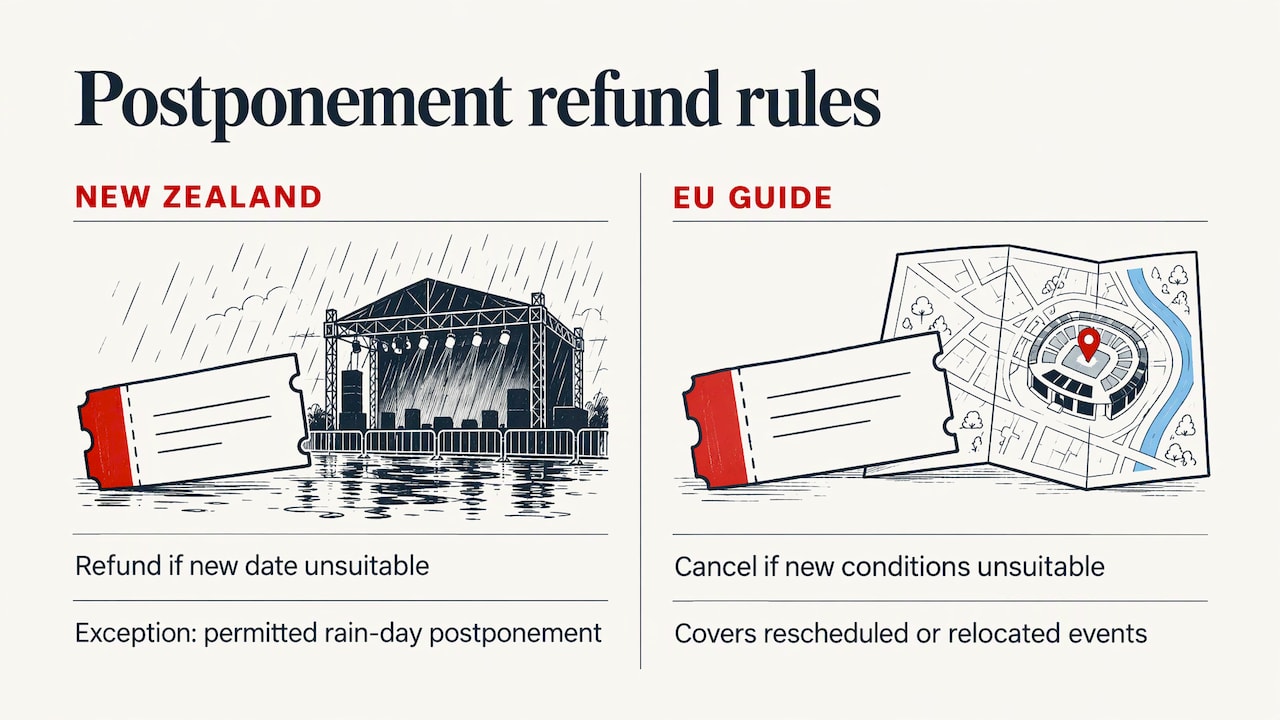
Some jurisdictions have clear answers. New Zealand’s consumer agency says that if a show is postponed and the new date does not suit you, you may be able to claim a refund unless the postponement was allowed for, for example an advertised rain day. The European network guide says that when an event is rescheduled or relocated, you have the right to cancel your ticket if the new conditions do not suit you.
In the US, the rules are being written right now.
California
California’s AB 1349 was chaptered as Chapter 474 of the 2026 statutes on September 27, 2026. It requires full refunds within 30 days for canceled events. For postponed, rescheduled or replaced events, it gives the consumer the option of a full refund or credit within 30 days of a request.
Illinois and New York
Two more states have bills worth watching, and both were still proposals when this was written:
- Illinois SB3623 would require a full refund of the ticket price and all associated fees within seven business days when an event is canceled and not rescheduled, with no action needed from the buyer. Per the bill text, it would take effect January 1, 2027. If a postponement has no new date within 60 days of the original date, buyers could request a full refund including fees.
- New York’s S.8221-B would require a full refund for listed cancellation and postponement circumstances. Buyers would have 30 days to keep, exchange or refund the ticket, and would get an immediate full refund if they make no choice.
Bill status changes. Check the legislature’s own page before relying on any of these.
Federal proposals
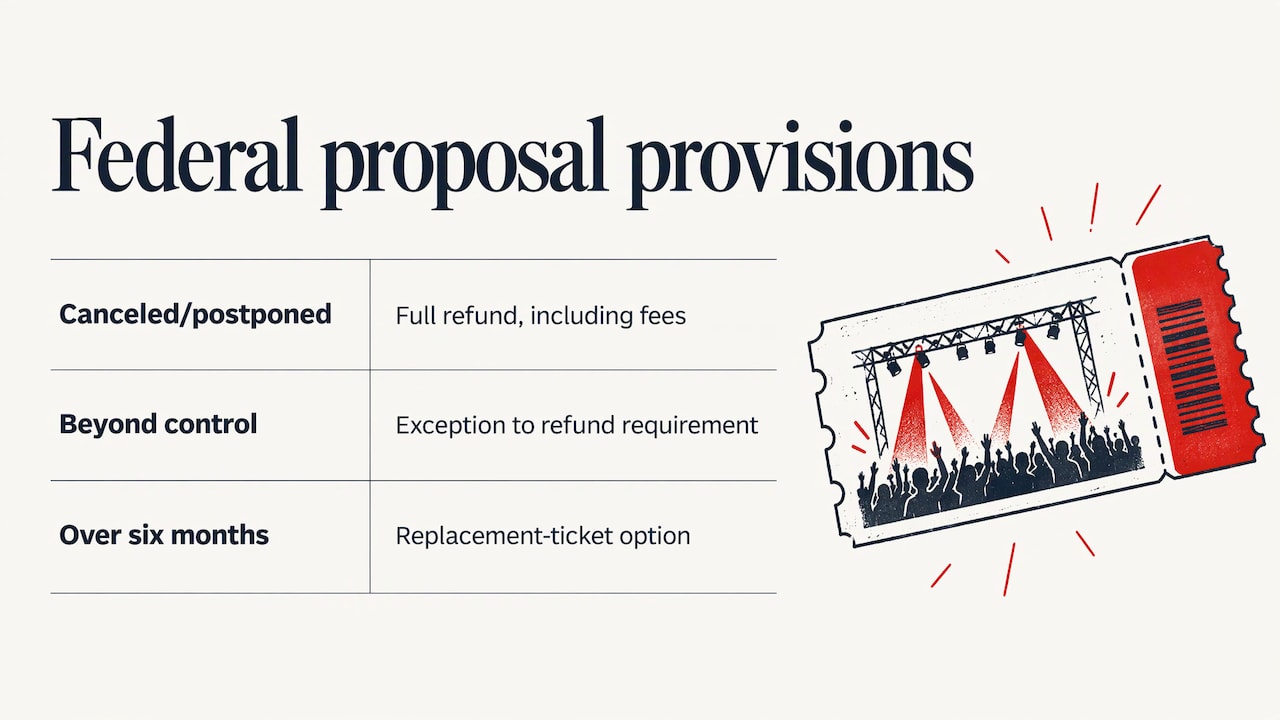
The CRS report says that in the current Congress, the TICKET Act and the Lower Costs for Everyday Americans Act would require a full refund including fees if an event is canceled or postponed, except when the cause is beyond the ticketer’s reasonable control, such as a natural disaster or civil disturbance. A replacement ticket option would apply if a postponement runs more than six months.
What is not refundable, even when the show is
Cancellation protection has edges. Know them before you buy.
- Fees. European guidance says sellers may exclude service fees, delivery and insurance from the refund. US treatment varies by state and seller. The New York bill, for instance, would let sellers keep previously disclosed handling and delivery fees on cancellations.
- Events outside the organizer’s control. Australia’s consumer regulator notes that no consumer-law remedy applies where the cancellation is due only to actions by someone other than the organizer, such as government restrictions. New Zealand’s agency explains that a force majeure clause can excuse a seller after a major unexpected event like an earthquake or pandemic, though some sellers still choose to compensate. Find that clause in the terms before you pay.
- Travel you booked separately. Poland’s consumer office warns that the biggest risk with concert trips abroad is the event being canceled after you have paid for transport and accommodation. A ticket refund does not cover those. Book lodging with free cancellation and check change terms on transport.
Where you buy decides how much you can recover
The seller matters as much as the law. Citizens Advice says you are unlikely to get a refund from a reselling website, a private seller or a fan-to-fan site. Australia’s regulator lists the risks of unauthorized sellers: being turned away at the venue, not getting the seats you ordered, not being told about restricted views, or receiving a fake ticket. It adds that a refund or exchange may be harder if the show is postponed or canceled.
That is why we steer fans toward official channels first, including presales. If you want to get in early through an official route, see every way into a presale, with or without a code. If a show is sold out and you need the resale market, read how verified resale tickets are labeled and what you can expect, and our guide to buying resale tickets safely. Resale terms are set by the platform, so read them before checkout rather than after.
A pre-purchase refund checklist
Spend two minutes on this before you pay. It is cheaper than any dispute later.
| Check | What to look for | Why it matters |
|---|---|---|
| Refund trigger | Canceled only, or also postponed, rescheduled, moved or changed lineup | Decides whether a new date leaves you stuck |
| Fee treatment | Whether service, delivery and processing fees come back | Fees can be a large share of the total |
| Refund form | Cash to original payment or credit/voucher | A voucher is not money back |
| Deadlines | Any window to request a refund after a change is announced | Missed windows can cost you the claim |
| Seller type | Official seller vs. resale or private seller | Resale refund rights are weaker |
| Force majeure | Clause covering events beyond the organizer’s control | Can excuse the seller entirely |
| Payment method | A credit card gives you a dispute route | Your fallback if the seller refuses |
Then save your order confirmation, the event page terms as they read at purchase, and every email about changes.
How to request a refund, step by step
- Wait for the official notice. Many sellers refund canceled events automatically to the original payment method. Check your inbox and the order page before contacting anyone.
- Read what you are being offered. If the event is rescheduled, you may be given a window to keep, exchange or refund. Note the deadline. California’s new law, for example, ties the refund to a request made within 30 days.
- Request the refund in writing. Use the seller’s refund form or email, quote your order number, and state whether you want money back, not credit.
- Ask about fees. If fees were not returned, ask in the same message whether they will be.
- Escalate if refused. In England, Citizens Advice says you can use the complaints procedure of the Society of Ticket Agents and Retailers if the seller is a member, and otherwise try your card company. In the US, your state attorney general’s consumer office is the place to complain about a seller.
- Dispute the charge with your card issuer. Western Australia’s consumer protection commissioner recommends seeking a chargeback from your bank if a refund is refused. Contact your card issuer promptly, because dispute windows are limited, and ask what documents it needs.
If you bought a ticket for a show abroad, remember that the contract may follow that country’s law. Poland’s consumer office warns that complaint and refund rules can differ and advises checking the currency and international fees.
When a show changes but is not canceled
Sometimes the headliner drops out, the venue changes or a support act pulls out. Western Australia’s commissioner explains that under Australian consumer law, a changed line-up, venue or date can entitle you to a refund or partial refund, with partial refunds for smaller changes such as a support act cancelling. That is Australian law, not a US rule, but it shows the logic regulators apply: if you would not have bought the ticket knowing the change, you have a case. In the US, check your state’s rules and the seller’s terms, and ask in writing.
Promo: plan the purchase before the onsale
Refund questions are easiest to solve before checkout. We write step-by-step guides on presale access, onsale dates and buying prep so you can get into the official sale with a plan.

Start with our presale sign-up guide to register for the sales that matter, then see the artist presale walkthrough for the official artist route.
Our perspective
Fans ask us whether a ticket is “refundable” as if it were a setting on the page. It is not. It is a bundle of conditions: who sells it, what triggers the refund, whether fees come back and how you paid.
We built Ticket News Hub around real fan questions, without hype or insider tricks. Our view is that the best refund protection is a good purchase: sign up for the official presale, buy through an official channel, read the terms before the countdown ends and keep your records. Presales give early access, but they do not guarantee tickets, so prepare a plan for the onsale too.
Rules are moving toward the fan, with state laws and federal proposals aimed at cash refunds for canceled and postponed shows. We will keep covering them in plain language, so you know what you are agreeing to before you pay.
Capital
FAQ
Can I get a refund if I just change my mind?
Usually not. Tickets for an event on a specific date typically have no right of withdrawal, so a refund exists only if the seller’s terms or an insurance product provide one. Check the wording at checkout, because it is hard to get a refund afterward.
Do I get my fees back if the concert is canceled?
It depends on the seller and your state. Some laws and proposals require fees to be refunded with the ticket price, while others let sellers keep certain handling or delivery fees. Ask for the refund in writing and say that you expect the full amount you paid.
Are resale tickets refundable?
Often much less than tickets from an official seller. Resale and fan-to-fan purchases carry weaker refund rights, and a postponed or canceled show can be harder to resolve. Read the platform’s guarantee before you pay, and use a credit card so you have a dispute route.
What if the concert is postponed and I cannot make the new date?
The answer depends on your state and the seller’s terms. California now gives buyers of postponed or rescheduled events the option of a full refund or credit on request within 30 days, and other states and Congress are considering similar rules. Ask for a refund in writing before any stated deadline passes.
Will a refund cover my flight and hotel?
No. A ticket refund covers the ticket, and sometimes the fees. Book travel with free cancellation where you can, and consider travel insurance that covers trip cancellation, as Poland’s consumer office suggests.
Sources
- Tickets for Live Entertainment Events, Congressional Research Service
- S. Rept. 119-17, Senate committee report
- California AB 1349 bill text
- Illinois SB3623 bill text
- New York S.8221-B bill text
- Buying tickets to events, ACCC
- How consumer guarantees apply to event tickets, Western Australia Commissioner
- Event tickets, Consumer Protection New Zealand
- Buying tickets for events, European Consumer Centres Network
- Getting a refund on an event ticket, Citizens Advice
- Concert Guide, UOKiK
Leave a Reply